Ⅰ. GENERAL SAFETY PRECAUTIONS
Read and follow all safety precautions in this manual.
Improper installation, operation or maintenance of the Allied equipment could result in serious or fatal injury.
Only qualified personnel may operate and service the equipment.
The primary responsibility for safety with this equipment falls to the operator.
Make sure the equipment is operated only by trained individuals that have read and understood this manual.
Do not use support material made of concrete blocks, logs, buckets, barrels, or any other material that could suddenly collapse or shift positions.
Make sure the support material is solid, not decayed, warped, twisted, or tapered.
Lower the booms to the ground level or on blocks.
Lower the booms and attachments to the ground before leaving the cab or operator’s station.
Hydraulic fluid under pressure can penetrate the skin and cause serious injury or death.
Hydraulic leaks under pressure may not be visible.
Before connecting or disconnecting hydraulic hoses, read your prime mover’s operator’s manual for detailed instructions on connecting and disconnecting hydraulic hoses or fittings.
Keep unprotected body parts, such as face, eyes, and arms as far away as possible from a suspected leak.
Flesh injected with hydraulic fluid may develop gangrene or other permanent disabilities.
Know your equipment's capabilities, dimensions and operations before operating it.
Visually inspect your equipment before use, and never operate equipment that is not in proper working order with all safety devices intact.
Check all hardware to assure it is tight.
Make certain that all locking pins, latches, and connection devices are properly installed and secured.
Remove and replace any damaged, fatigued or excessively worn parts.
Make certain all safety decals are in place and are legible.
Keep decals clean, and replace them if they become worn and hard to read.
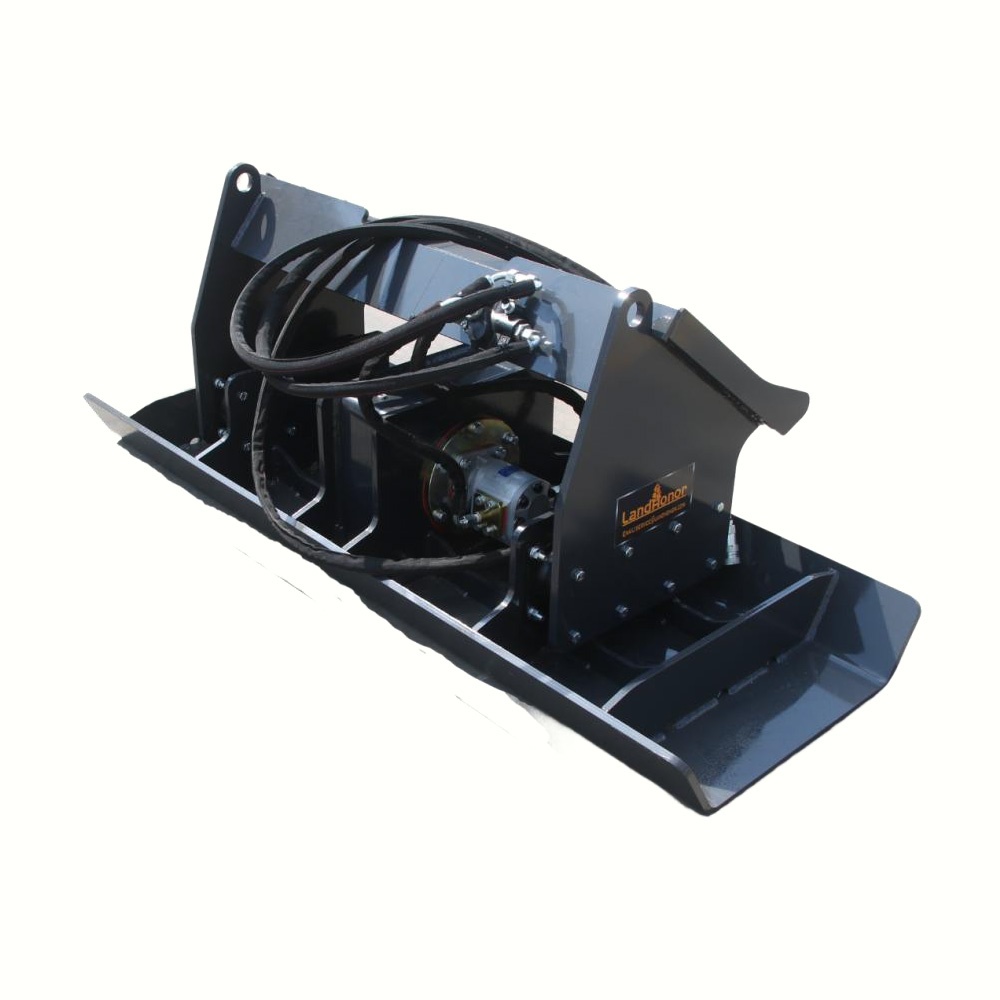
Before operating the Vibratory Plate Compactor,Block off work area from bystanders, Operate only from the operator's station.
When operating on slopes, drive up and down, not across.
Avoid steep hillside operation, which could cause the prime mover to overturn.
Reduce speed when driving over rough terrain, on a slope, or turning, to avoid overturning the vehicle.
Before exiting the prime mover, lower the plate to the ground, turn off the prime mover's engine, remove the key and apply the brakes.
Do not drive close to ditches, excavations, etc., cave in could result.
Do not smoke when refueling the prime mover.
Allow room in the gas tank for expansion. Wipe up any spilled fuel.
Secure cap tightly when done.
Before performing maintenance, lower the attachment to the ground, turn off the engine, remove the key and apply the brakes.
Never perform any work on the attachment unless you are authorized and qualified to do so.
Always read the operator’s service manual before any repair is made.
After completing maintenance or repair, check that the attachment is operating correctly.
If it is not functioning properly, always tag "DO NOT OPERATE" until all problems are corrected.
Worn, damaged, or illegible safety decals must be replaced.
New safety decals. Never make hydraulic repairs while the system is under pressure.
Serious personal injury or death could result. Never work under a raised attachment.
MANDATORY SAFETY PRECAUTIONS
Before cleaning, lubricating, or servicing this unit, the following MANDATORY SAFETY SHUTDOWN PRECAUTIONS should always be followed:
1. Move the drive control of the host machine to the neutral position and idle engine down.
2. Shut off the hydraulic system of the compaction plate.
3. Position the compaction plate so that it rests completely on the ground or floor.
4. Engage the host machine's hand brake.
5. With the host machine's throttle in the slow idle position, shut the engine off and remove the ignition key.
6. Relieve the hydraulic pressure by moving the auxiliary hydraulic flow control levers in both directions.
ONLY when you have taken these precautions can you be sure it is safe to proceed. Failure to follow the above procedures could lead to death or serious bodily injury!


 Current location: